Updated August 2026
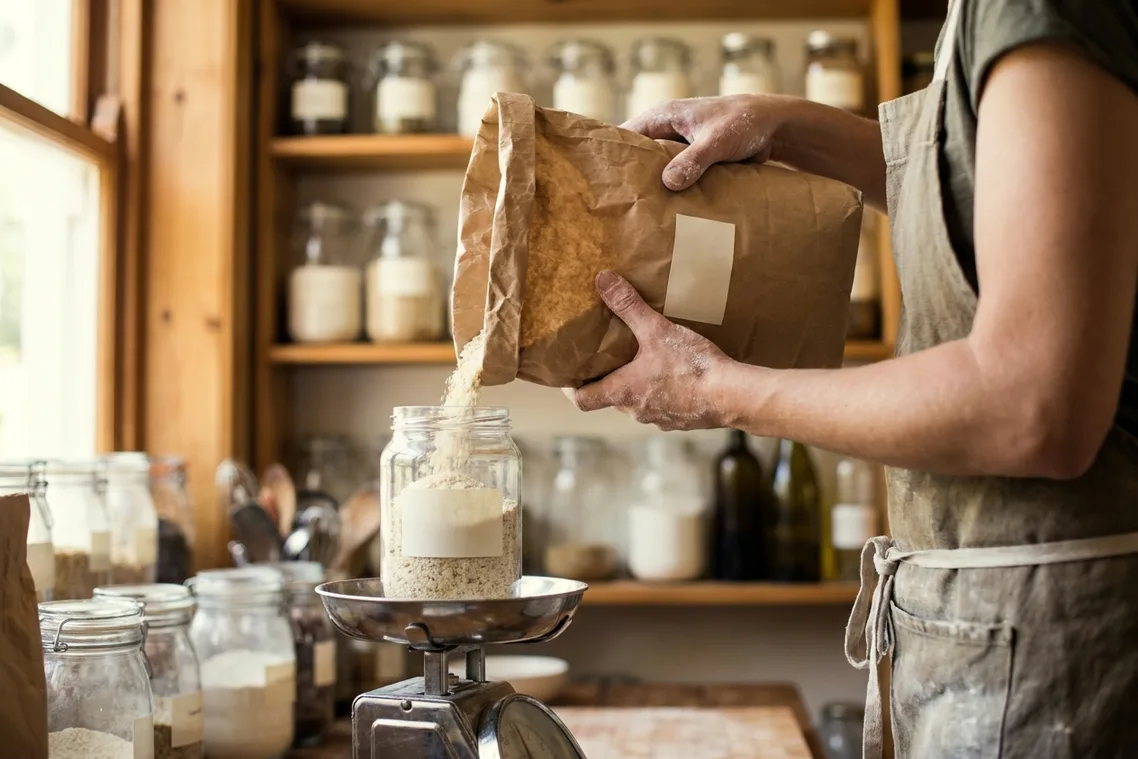
Supplies and sourcing for a handmade business
Sourcing is where a lot of cash quietly disappears before you have sold a thing. The pattern is always the same: a maker finds a good supplier, sees the per-unit price drop as the order size climbs, and buys a year of material for a product they have not tested yet. This chapter is about avoiding that: buying your materials in the right order, buying small to test before you commit, tracking where each material came from, and knowing the point where bulk actually pays.
Know your material categories before you shop
Every craft splits into a small set of material categories, and knowing them keeps you from over-shopping one and forgetting another. Naming your own set is a ten-minute job you do once, and it is the frame everything below hangs on.
- Candles. Wax, fragrance, wicks, vessels.
- Soap and bath-and-body. Oils and butters, lye, additives and fragrance, packaging.
- Ceramics and pottery. Clay body, glaze materials, and firing — kiln time is a material you buy by the load, not by the piece.
- Jewelry. Metal, findings, stones.
- Baked goods. Flour and fats, leavening and flavorings, packaging — and the shortest shelf life of anything in this list, on the ingredients as well as the product.
- 3D printing. Filament or resin, plus the wear parts consumed by the hour: nozzles, build plates, vat film.
- Laser and CNC work. Sheet stock, plus tube hours or cutting tools, consumed by the minute.
In each case a few of the categories are consumed every batch and a few are closer to one-time or slow-moving. Sorting yours that way before you place a first order tells you which lines deserve care and which are noise.
The real reason to name the categories, though, is that they interact. Nothing in a craft is a standalone purchase, and the interaction is always the thing that ruins an untested bulk order:
- Candles. You cannot pick a wick in isolation: it depends on the wax, the fragrance load, and the vessel diameter, so the four are one decision, not four.
- Ceramics. Clay body, glaze, and firing temperature are one decision. A glaze that fits one body at one cone can craze, crawl, or run on another.
- 3D printing. Filament, nozzle, and print profile move together. A new material usually needs a re-tuned profile, and some need a harder nozzle before they will run at all.
- Laser and CNC. Settings belong to the material, not to the machine. Power, speed, and passes, or feed, speed, and depth of cut, are re-derived every time the stock changes.
- Baked goods. Flour, hydration, and bake are one system. Change the flour and the dough handles differently and bakes differently, so the recipe and the oven schedule move with it.
- Jewelry. Metal, solder, and stone setting interact: solder flows at a temperature some stones will not survive, which decides your construction order before you buy anything.
- Soap. Oil blend, lye quantity, and cure time are locked together. Change the oils and the lye amount changes with them, and so does how the bar cures.
That interaction is exactly why buying deep in any single category before you have tested the whole combination is a trap. The cheap material you bought a case of is only cheap if the combination it belongs to works.
Buy from vendors who de-risk the combination
The safest place to start is a dedicated craft-supply vendor that carries materials sized and documented to work together. For candles, that means a supplier whose wax, fragrance oils, wicks, and vessels come with size charts and test data. Every craft has its version: a glaze supplier that publishes firing range and fit, a filament vendor that publishes a starting profile, a laser stock supplier that publishes settings by thickness, a soap supplier that publishes saponification values for its oils.
That documentation is doing real work for you. It narrows the guesswork that would otherwise cost you a dozen ruined test units, and it is the cheapest testing you will ever be given.
You will find cheaper raw materials from general wholesalers, and eventually you may buy there. But early on, a vendor’s charts and published test notes are worth more than a small discount, because they shorten the testing loop before it costs you a ruined run.
Buy small to test, then scale what performs
This is the single most important sourcing habit: buy a test quantity, prove the product, then buy the amount your sales actually justify.
Concretely, start with one variant of each category — one wax, two or three fragrances, a single vessel, a single wick size; or one clay body and two glazes; or one filament and one nozzle — in the quantity it takes to test the combination and make one small batch. At that scale the materials themselves are cheap. In candles, where the prices are published, soy wax runs $1.50–$3.00 a pound and vessels $1–$5 each (per CandleScience and candle culture, 2025), so a lean test run costs very little and still tells you which combinations are worth buying in quantity. Your craft’s numbers will differ; the ratio of test cost to bulk cost rarely does.
Then, and only then, scale the proven combinations. Once a product performs, sells, and reorders, buying its materials by the case is smart. Buying a case for something you have not made yet is not. It is cash locked into an unproven bet.
The machine-led crafts have one extra wrinkle here, because their expensive part is not a material. Buying a small quantity of filament or plywood to test is easy; the machine is the commitment. The equivalent of buying small is renting the machine — a community studio kiln, a maker space, a print or cut service bureau — until the product has proven it deserves one of its own.
The costs behind this lean-start approach are laid out line by line in the startup costs chapter, including the difference between the equipment you buy once and the materials you buy every batch.
When bulk actually pays
Bulk buying is powerful: it lowers your per-unit cost, which widens the margin on every unit you sell. The question is never whether bulk is cheaper per unit; it is whether you will use it before it costs you.
Bulk pays when a product is proven and selling steadily, because then the lower per-unit cost flows straight into products you know will sell. Bulk hurts when it ties up cash and shelf space in materials that expire, degrade, go out of fashion, or turn out not to move. Fragrance can be reformulated. Filament and resin absorb moisture. Flour, butter, and nuts go rancid, and resin has a shelf life of its own. Seasonal colors date. A scent that felt like a winner in October can sit untouched by March.
A simple discipline:
- While you are still validating a product, buy test quantities only.
- Once your sales history shows a product moving, buy bulk for that product’s materials specifically.
- Never buy bulk “to save money” on something you have not sold yet; that is how makers lock up the cash they need for the next test.
Overbuying is one of the most common ways a new maker runs out of working capital while the shelves are full. The savings on paper are real; the cash you cannot get back is more real.
Track lots and vendors from the first batch
Recording which vendor and which lot a batch used costs you almost nothing and can save you badly. The scenario it protects against is specific: a supplier reformulates something, or a lot behaves differently, and suddenly a product that always worked starts misbehaving. A fragrance changes. A clay body moves. A spool prints differently from the last one. A flour mills coarser. If you logged the vendor and lot, you can trace exactly which of your products used the affected material and respond precisely: pull the right batch, notify the right customers, or simply switch lots with confidence. Without that log, you are guessing across everything you have made.
For some crafts this is good practice. For others it is expected of you. Soap and cosmetics carry manufacturing and record-keeping duties, and food carries traceability and allergen duties, both of which the labeling and regulations chapter maps to the right authority. Either way, the light version is enough: vendor, lot, and which batch used it. The batch records chapter shows exactly how that folds into the batch sheet so it is one habit, not two.
Keep material costs from eating your margin
Supplier prices drift. Minimum orders change. Shipping stacks up. The result is that a product that cleared a healthy margin last quarter can be thin today with nothing on the surface looking wrong — same recipe, same vendor, quietly higher cost.
Metal is the clearest case, because it is one of the few craft materials with a public market price you can watch move. Most materials drift the same way with no ticker to warn you. The guide on whether to reprice when silver jumps works that question through on sterling, and the reasoning transfers to butter, to a resin price rise, and to a sheet-goods increase.
The defense is to cost your products off current invoices, not off the price you paid a year ago, and to recheck whenever a supplier raises prices. When you know your real cost per unit and keep it current, a price increase becomes a deliberate decision instead of a surprise you discover at tax time. A maker inventory tool can hold those current costs so the recheck is a glance rather than a spreadsheet afternoon, and the pricing chapter’s calculator turns an updated cost straight into an updated price.
The other half of not overbuying is not running out mid-batch, and both are the same question asked from opposite ends: how much of a material do you actually consume between orders. Set a reorder point per material once you have a few months of batches behind you, rather than reordering on the feeling that a shelf looks empty. How low-stock alerts work covers the mechanical version of that habit.
Sourcing well is not about finding the absolute cheapest material. It is about buying the right amount of the right proven material, knowing where it came from, and keeping your costs current enough that your prices still make money. Do that, and your supply shelf becomes an asset instead of a place your cash goes to wait.
Frequently Asked Questions
- Where do I buy my materials?
- Start with a vendor that serves your craft specifically, because their sizing and test data cut down the guesswork on the materials that have to work together — wax with wick and vessel, clay body with glaze and firing temperature, filament with nozzle and profile, sheet stock with bit or laser settings. Buy small to prove a combination before you commit to a bulk order, then scale the quantities that actually perform. Candle supply is the best-documented case: soy wax runs $1.50–$3.00 a pound and vessels $1–$5 each, so bulk buying the proven combinations is where the savings are (per CandleScience and candle culture, 2025).
- When is buying in bulk worth it?
- Once a product is proven and selling. Bulk lowers your per-unit cost, but it also ties up cash and shelf space in materials that expire, go out of fashion, or turn out not to sell. Buy test quantities while you are still validating a product, and only buy bulk for the materials your sales history says you will actually use. Overbuying "to save money" is one of the most common ways new makers lock up cash they need.
- Should I track lot numbers and vendors?
- Yes. It costs almost nothing and saves you badly if a material has a problem. Recording which vendor and lot a batch used means that if a fragrance is reformulated or a wax behaves differently, you can trace exactly which products used it and respond precisely instead of guessing. For soap and cosmetics it is also part of the record you are expected to keep. The batch-records chapter shows the light version that works.
- How do I keep material costs from eating my margin?
- Know your real cost per unit and watch it. Supplier prices drift, minimum orders change, material markets move, and shipping adds up, so a product that cleared a healthy margin last quarter can be thin today without anything looking wrong. Cost your products off current invoices, not the price you paid a year ago, and recheck when a supplier raises prices; the pricing chapter’s calculator makes the recheck quick.
Know your real cost per unit without the spreadsheet
Batchnook is built for solo and small-crew makers — snap a photo of a supplier receipt, approve the lines it read, and every product's true cost and margin recomputes. The free tier tracks your first 3 products with no card and no countdown, enough to prove the math on your bestsellers.
Get this as a 7-day course
One short email a day, the whole start-to-first-job path, written for someone doing this for the first time. Unsubscribe with one tap, any time.
You're in. Day one lands within a day. Check the promotions tab if it hides.
That didn't send. Check the address and try once more.